
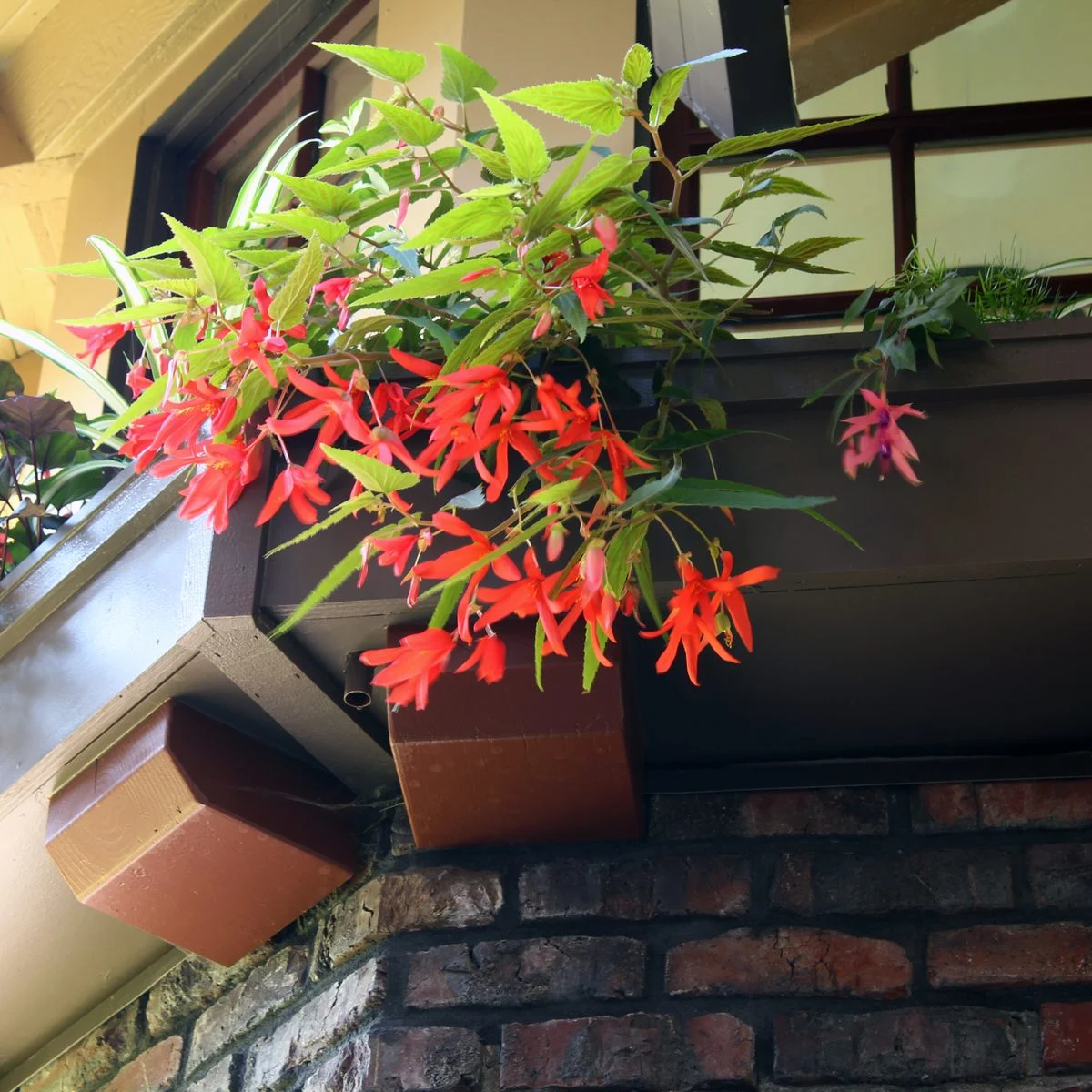
The house is a beauty. This historic home sits in Irvington, one of Portland's historic neighborhoods, and the homeowner had planter boxes and window boxes all over it, full of plants. She was a great gardener, and it showed.
Then the turret nearly collapsed.
By the time we got to this 2011 project, there was almost nothing left of it. It remains one of our favorite renovation stories to tell, because it taught us a lot about what happens when a garden and a house share a wall. If you're going to put a bunch of dirt up against your house, fill it full of plants, and aim your hose at it every day, you damn well better get it really, really right.
Why planter boxes rot house siding
The original planters were cedar boxes screwed directly to the cedar siding. They were filled with soil and plants, which meant wet soil sat against the house all day, every day. No kidding there's going to be an issue.
Wood can handle getting wet. It can't handle staying wet. A wall needs time to dry out between rain and watering, and this setup never gave it any. Water also finds every gap. It laps off one surface, drops onto the next, and works its way down through a house, and this one had a lot of places where all of that came together in one spot. We did the best we knew how at the time, and we still weren't set up for what that much water would do.
Termites showed up, too
The wet wood also attracted termites, which are very rare in Portland. When we called an exterminator, he told us they weren't termites. He hadn't seen one in 10 years, and he works in this business every day. We said we were pretty sure. He came out, took a look, and told us it was only the second time he'd ever seen them.
Repairing a historic home without changing how it looks
This was an existing house in a historic neighborhood, and you couldn't touch it, at least not easily. The homeowner didn't want us to anyway. It was a very beautiful house, and nobody wanted to redo the exterior in a big way. So the job was to keep the look and fix how the water moved.
How we rebuilt the planter boxes, layer by layer
We rebuilt the boxes out of MDO, short for medium density overlay. It’s similar to a marine-grade plywood with a billboard-type facing over the top. We wanted a really durable material that still looked like painted wood, and this was the best option we had.
Why not metal? The homeowner wanted the boxes to look like wood, since they sat on the outside of a very nice house. So we used both. Here is how each box goes together, from the outside in:
- A painted MDO box on the outside, so it still looks like wood.
- A metal liner inside the box, with a gap between the wood and the metal.
- A French drain at the bottom of the liner, which is a drain set in gravel that carries water out of the box. Ours runs to a drain on the outside, so water leaves on purpose and away from the house.
- Gravel over the drain, then soil, then plants.
Two more details sit between the box and the house. When we hung the boxes, we left a good 3/4" gap off the house using composite donut spacers, so air can move behind them. We also flashed the window, which means we added material that directs water where we want it to go. In this case, water goes into the box and none gets behind it. Together, the drain, the gap, and the flashing give water a planned way out and give the wall air to dry.
We pulled the siding off in parts of the house. The turret was a different story. It was just gone, so we rebuilt the whole thing.
What we'd do differently today: a rain screen behind the siding
This is the part we care about most, because it's where we've learned something.
We didn't put a rain screen (sometimes written rainscreen) behind the siding on this house. At the time, I wasn't even really aware of them. A rain screen is a gap behind the siding that lets water drain and air move, so the wall can dry out. If we did this remodel today, taking off the siding and adding a rainscreen siding detail would be a much bigger focus. We'd rebuild the turret with a rain screen and probably a self-adhered membrane behind it, which is a sticky, waterproof layer applied right to the wall, for an extra layer of protection. Our rain screen siding post goes deeper on why.
For the boxes, we'd consider a composite material that can be painted, without looking like metal. It would have been that much more durable.
We'd also push back harder on whether you really need soil attached to your house. It's not the greatest idea. We're honest that we might not win that argument. The house looks very pretty, and she was a great gardener. Part of our job is making the details good enough that you don't have to choose between a healthy wall and a garden you love.
Planter boxes on your own house: what to remember
- Keep soil from touching the house.
- Line the box so water isn't soaking into the wood.
- Give the water a strategic path out, like a drain that runs away from the wall.
- Hold the box off the house so air can move behind it.
- Flash anything above it so water goes into the box and not behind it.
- If the siding is coming off anyway, put a rain screen behind it.
Plants and houses can get along
Plants on a house can work, and they can look great. They only work if someone plans for the water from day one, and that's what we do now on every job. If you have an older Portland home and a garden you don't want to give up, or a wall that's already showing you something is wrong, we'd be glad to talk it through. Reach out to Birdsmouth here about your remodel or renovation, or start with this rain screen blog to see how we think about walls. You can also read about our retrofit and remodel work.
Planter Box FAQs
Can you put planter boxes on house siding?
It can work, but only if someone plans for the water from day one. In our view, keeping soil off the house entirely is the better choice. If the planters are staying, line the box, drain it on purpose, hold it off the wall for airflow, and flash anything above it.
Why do planter boxes cause wood siding to rot?
Wood can handle getting wet, but it can't handle staying wet. Wet soil against siding keeps the wall from drying out between rain and watering, and that is what rotted this turret.
Are termites common in Portland?
No. They are very rare here. The exterminator we called on this project said he hadn't seen one in 10 years. That said, constantly wet wood is what attracted them to this house.
What is a rain screen, and do I need one behind my siding?
A rain screen is a gap behind the siding that lets water drain and air move, so the wall can dry out. We didn't install one on this house, and today we would. If your siding is coming off during a renovation or retrofit anyway, it's the best time to add one.
What is MDO, and why use it for planter boxes?
MDO stands for medium density overlay. It's similar to a marine-grade plywood with a billboard-type facing, and it let us build a durable box that still looks like painted wood.
Can you repair a historic home without changing its look?
On this Irvington house, yes. The homeowner didn't want the exterior to change, so we kept the look and changed how the water moves, with a liner, a drain, an air gap, and flashing.
Josh Salinger is the Founder & CEO of Birdsmouth Design-Build.